If the biosphere as a whole is a global wetware network, a vast distributed mechanism devoted to capturing the Sun’s energy and maintaining complex structure, then what place does the human occupy within that network? To answer that honestly, without the usual self-flattery, I have to set aside anthropocentric pride. The very pride that whispers that we are the center of the universe, the meaning of creation, the crown for whose sake all of this was set in motion.
No. We need to look at ourselves strictly in functional terms. Without pathos. Without illusions.
We are not the crown of creation for whom the stars were lit and the dinosaurs evolved. We are not a crown at all, but a special type of node that emerged within this network and occupied its own niche.
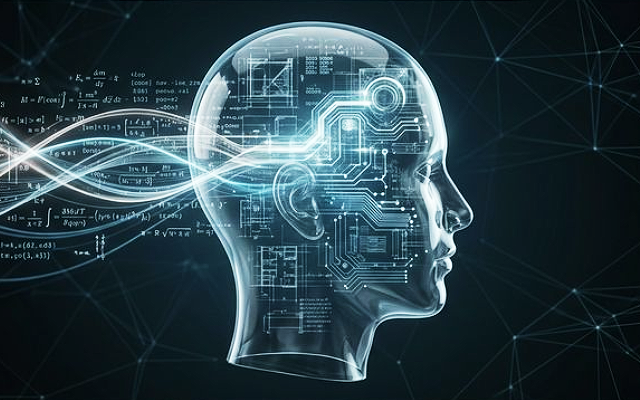
01—The Human as a Network Terminal
I chose the word “terminal” deliberately. It describes our function well. It carries neither religion nor inflated expectations nor, on the other hand, any diminishment. A terminal is simply a point of connection. A device at the edge of a distributed system. A place where an incoming flow of signals, constraints, and possibilities from the environment is transformed into local action.
The basic logic of life, broadly speaking, is the same everywhere: receive a signal from the environment, process it by internal means, and respond with an action—by changing either your own state or the external world.
Within this enormous bio-network, the human looks like a computational node of a very particular kind. We do not merely react to stimuli, as every living organism does. We build internal models of the environment that can not only be used, but also symbolically transmitted to others. We do not simply see a tree; we construct its image, its map, its connections to other trees. And most importantly, we can transfer these compressed, packaged models from one terminal to another. We can transmit them. Through language, through culture, through drawings on walls, through books, through external storage media. One terminal can upload its internal model into another.
Armor / Important:
And it is precisely here, at this junction, at the boundary between raw biology and the architecture of data transmission, that the central strangeness lies. The strangeness that, if you think it through, explains almost everything about our species. We are born not as blankness, but with a surprisingly small amount of rigidly specified, task-specific content—and with an architecture ready for rapid writing, reconfiguration, and the loading of external models.
02—Tabula Rasa as an Engineering Feature
If you look at most animals, they arrive in the world already heavily preconfigured. Evolution has already loaded into them a set of stable behavioral patterns, honed for a typical environment.
A kitten, barely having opened its eyes, almost immediately knows how to be a cat. How to hiss, how to sharpen its claws, how to hunt a moving object. A fledgling knows what to do with its wings even if it has never flown. This is hardcode. Instincts rigidly embedded in read-only memory. It works fast. It works reliably. And it is extremely economical in terms of resources—there is no need to spend years learning.
Against this background, the human displays a startling, almost frightening helplessness at the start. A long, very long childhood. Absolute physical vulnerability—we can neither run away nor defend ourselves nor obtain food without the help of adults. Zero ready-made survival skills. Zero.
From the standpoint of the narrow, concrete task of “survive right now, in this forest, tonight,” this looks like a serious malfunction. Like an assembly error.
But if we change scale, if we look across thousands of generations, the picture flips. We see an architecture of an entirely different class. The human is a universal computing platform.
A state of initial openness. Tabula Rasa, if you like—but with an important qualification. The newborn does not arrive empty, but with a basic architecture and a very small amount of rigidly specified, task-specific content. This includes a predisposition for language, early intuitions about object permanence, causality, and danger, along with a set of simple reflexes and mechanisms of attachment to other people.
But we have almost no applied hardcode. No rigid, non-erasable programs for specific environmental scenarios. We are not born knowing how to build an igloo or tan a hide. That is an empty slot. A slot left open for the loading of whatever software is relevant here and now.
A highly specialized organism is effective precisely within the range of conditions to which natural selection has long adapted it. Change the environment sharply, and that advantage can quickly turn into a limitation.
A terminal without ready-made application scripts is weak at the start. Very weak. But it can load into itself the rules of the game for almost any environment: desert, tundra, jungle, technosphere. In a world where climate, landscapes, and threats can change rapidly, where ice ages give way to warming periods, the loading of software into a slowly trained terminal turned out to be the most advantageous strategy. A strategy that makes large-scale adaptation possible and allows expansion into more and more niches.
Armor / Important:
I am not claiming that “we were deliberately designed empty at the factory.” No. I am stating a purely architectural fact. For a species that survives not by fangs or hide, not by speed or power, but by flexible abstraction and the cooperation of many nodes, an open universal platform proved evolutionarily more efficient than even the most perfect rigid hardcode.
03—Learning: The Algorithm for Compressing Chaos
Every animal builds an internal model of the environment—otherwise it simply could not act within it. But in the human, that model has reached a special depth: it has become not merely an instrument of orientation, but an independent layer of life that can be symbolically transmitted, accumulated, and restructured.
And for such a terminal, learning is a process of data compression. Compression. Imagine a vast, endless stream of raw, unprocessed experience: millions of events, encounters, mistakes, observations. All of it is chaotic. All of it demands memory. All of it is expensive to store and process.
Learning transforms that raw stream into compact executable rules. It compresses scattered episodes into a formula: “if x happens, and x is greater than y, then z will most likely follow. And you should respond like this.”
If you think about it, this is the systemic meaning of many things we take for granted.
This is the meaning of skill. When we learn to ride a bicycle or tie our shoelaces, at first it requires enormous effort; the whole processor is overloaded. But then the action sinks into automatism, into cache. It executes quickly, easily, without consuming many resources. Skill makes successful action automatic, freeing the brain from having to recalculate the situation from scratch each time.
This is the meaning of a scientific knowledge base. Knowledge accumulated by others and tested through hundreds of experiments allows us to act with precision without having to test fatal bugs on ourselves. You do not need to eat every mushroom to learn which ones are poisonous. It is enough to load the compressed database.
This is the meaning of culture. Culture is an external archive. A gigantic cloud storage system that preserves and transmits compressed packets of other people’s experience. Configuration files, assembly instructions, bug warnings. These are passed on to new terminals that have only just connected to the network and still know nothing and can do nothing on their own. To the next generations.
Just as plants transform the flow of solar energy into the chemical bonds of organic matter, so humans transform the flow of raw events into stable models, rules, and meanings. Into abstract models that can be stored, transmitted, and overlaid onto reality. This is simply the next layer of execution. More complex and more energy-intensive than digestion, but built according to the same logic.
04—Novelty as a Product of Scale (A Distributed Laboratory)
A common question is this: where does novelty come from in the system at all, if the basic physical laws do not change?
It arises not despite the stability of the rules, but because of it. The same constants, the same constraints, the same set of basic elements—given a sufficiently large number of interactions—begin to yield an almost inexhaustible combinatorial richness.
Eight billion people are not merely a mass of environmental consumers. They form a gigantic distributed laboratory. Different bodies, different languages, different landscapes, different cultural archives, different sets of errors and successes. Each individual node compresses experience in its own way, assembles its own models, tests them against reality, and—if fortunate—passes a successful build onward.
Novelty here is born from three things: variation, memory, and selection. Someone combines already known elements into a new form. Someone finds a solution where others had reached a dead end. Someone makes an error that suddenly turns out to be not noise, but discovery.
No mysticism. Just a network of sufficient scale in which universal terminals continuously generate, test, discard, and preserve variants.
05—Local Administrator Privileges
This may sound bold, even audacious. But if we stay within the bounds of engineering language, it is the most precise and driest description of what is usually called free will.
The human possesses a capacity that is rare in the biosphere: the ability to partially alter its own behavior not only under environmental pressure, but also through internally formulated rules. If we continue the engineering metaphor, this resembles limited local administrator privileges over one’s own system.
We are able to do what in other species is either absent or present only within a much narrower range. We can change our behavior not only reactively, not only under the direct pressure of the external environment. We can change it through rules that we ourselves have written. Rules we ourselves have invented, formulated, and imposed upon ourselves.
We are capable of setting goals that raw biological physics never demanded of us in the first place. Hunger, fear, reproduction—those are understandable. But we can want to write a symphony, climb a mountain, understand the structure of a black hole. The body did not ask for this. Local administrator privileges make it possible to redefine the requests.
Armor / Important:
A philosophical safeguard is of course needed here. By calling this “Root access,” I am not settling a dispute that has lasted for millennia—the dispute between physical determinism, in which every one of our decisions is merely a continuation of the previous state of our neurons, and the idea of absolute, unrestricted free will. I am not claiming that we are divinely free of causal chains. I am using the term in a classificatory sense. Compared with a wolf, compared with any other node in the biosphere, the human-terminal possesses local capacities to rewrite its own software. Not absolute ones. Capacities limited by pain, hormones, sleep, and resources. But still exceptional in degree, depth, and scale. In no other species known to us has this capacity unfolded so far.
And this, if you think it through, is at once both the great hardware gift and a gaping, terrifying vulnerability.
A universal computing platform with administrator privileges can load useful, functional engineering software into itself. It can learn. It can become more intelligent. It can create something new. Or it can—and often does—load destructive garbage into itself. Cognitive viruses. Corrupted scripts. Ideas that will destroy both the terminal itself and neighboring nodes on the network.
Armor / Important:
From this simple observation arises an utterly earthly, practical responsibility. The point is not to “be good” out of fear of God or karma. The point is to understand, in hardware and engineering terms, exactly which processes are currently running in your memory. And whether they are destroying your own physical structure from within. Root access is not only freedom. It is also the risk of collapse through your own error.
—
Next: The Atom: The Elementary Cell of the System. Why, having broken the human down to the level of an abstract terminal network, do I suddenly return to physics and the atom? To close the architectural circle. And now we need to look at the most fundamental pixel of matter on which this entire incredible construction is hardware-stitched. How exactly is the most basic memory cell in the System formed?